Scandinavian Folk Art Seamless Patterns: Graphics & Patterns
First Impression: Warm, Handcrafted, and Quietly Confident
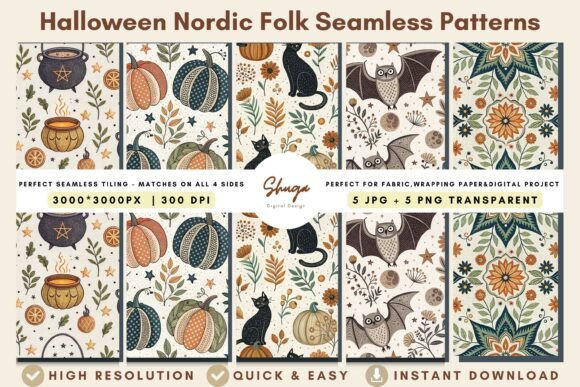
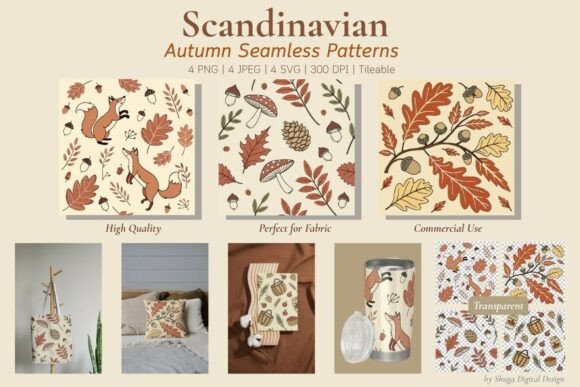
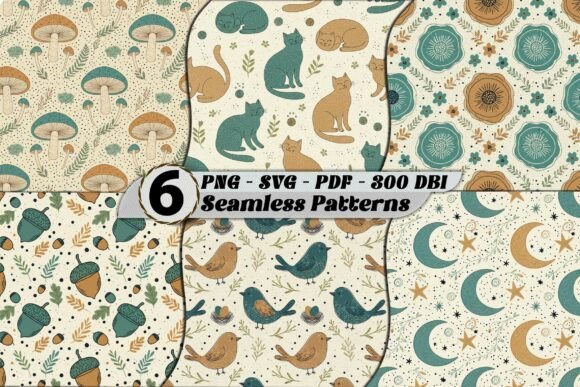
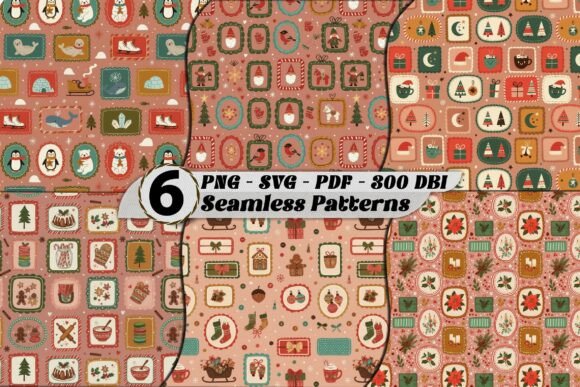
Opening the Scandinavian Folk Art Seamless Patterns set feels like stepping into a sunlit Nordic atelier—clean lines, subtle rhythm, and gentle organic motifs. These aren’t loud or trendy; they’re grounded in tradition but edited with modern restraint. Think stylized daisies, simplified pine boughs, rhythmic geometric repeats, and soft cross-hatched florals—all rendered with quiet precision. The mood is warm, trustworthy, and quietly confident—not overly rustic, not sterile, but deeply human. For a local business, this suggests authenticity without pretension: ideal for a small-batch bakery using heritage grains, a handmade soap brand sourcing local botanicals, or a children’s toy shop emphasizing natural materials and thoughtful design.
Where This Graphic Design Asset Fits Real Local Business Branding
I recently used Scandinavian Folk Art Seamless Patterns to refresh packaging and in-store visuals for “Hearth & Thyme,” a Portland-based herbal tea brand launching its first seasonal line. The patterns instantly elevated their visual language—not by shouting, but by grounding. They worked beautifully as:
- Subtle background textures behind product labels (printed on kraft paper with soy ink)
- Decorative borders on thank-you cards and reusable cotton tea sachet tags
- Hero graphics for Instagram carousels highlighting ingredient origins
- Background layers in Canva templates for weekly email headers and farmers’ market flyers
- Printable inserts inside subscription boxes—paired with serif typography for editorial warmth
- SVG-based accents on website banners and Shopify product mockups
Crucially, these patterns didn’t compete—they supported. They reinforced the brand identity without overwhelming the core message: care, craft, and local connection.
How It Strengthens Small Business Presentation
For local businesses competing on shelf presence, emotional resonance, and perceived quality, Scandinavian Folk Art Seamless Patterns delivers tangible value:
- Stronger first impression: A jar of honey wrapped with patterned kraft label reads “thoughtfully made” before a single word is read.
- Better product recognition: Consistent use across stickers, bags, and social posts builds visual memory—customers spot your jam at the co-op even from three stalls away.
- Clearer visual hierarchy: When layered *behind* bold typography (not over it), the patterns add depth while keeping key info legible.
- More consistent brand identity: One pattern family works across digital and physical touchpoints—no jarring shifts between web banner and hang tag.
- Improved customer trust: Thoughtful pattern use signals intentionality—a cue that the business values craft, not just convenience.
- More professional packaging: Even budget-friendly print runs gain sophistication when anchored by cohesive, culturally resonant design assets.
Best Uses: Where Scandinavian Folk Art Seamless Patterns Shines
This set excels where decoration enhances, rather than distracts:
- Product labels—especially on matte-finish substrates like recycled paper or linen-textured stock
- Packaging accents—as border elements on gift boxes, ribbon wraps, or belly bands
- Hero graphics—scaled large for Instagram Stories or printed posters in boutique windows
- Decorative brand elements—repeating as subtle backgrounds behind testimonials or ingredient lists
- Seasonal campaign visuals—pairing winter motifs with warm neutrals for holiday gift sets
- Social media graphics—used as textured overlays on flat-lay photos of handmade goods
Careful Use Zones: When Less Is More
Not every context benefits equally. Avoid using Scandinavian Folk Art Seamless Patterns in:
- Formal corporate branding—law firms or financial advisors may find them too soft or decorative
- Very small labels—fine details blur at under 1.5" height; test print at actual size
- Crowded packaging layouts—they lose impact beside dense ingredient panels or regulatory text
- Luxury minimalist brands—if your aesthetic relies on stark negative space and monochrome, these add unwanted texture
- Low-contrast backgrounds—some motifs fade against light greys or creams unless adjusted in saturation
Practical Brand Designer Notes You’ll Actually Use
Before committing to Scandinavian Folk Art Seamless Patterns for client work or your own business:
- Test it on real packaging mockups—not just screen previews. Print a 3" x 3" sample on your intended substrate.
- Check black-and-white usage: Do motifs retain clarity in monotone? Essential for cost-effective printing.
- Preview it on small labels: Zoom out to 25%—does the repeat still feel intentional, or chaotic?
- Test it with your brand colors: Overlay patterns with your primary palette in both light and dark modes.
- Compare it side-by-side with competitor packaging—does it stand out with distinction, not noise?
- Review PNG transparency: Are edges crisp? Does the alpha channel hold up on colored backgrounds?
- Inspect SVG editability: Can you isolate and recolor individual motif groups in Illustrator or Figma?
- Test typography pairings: Try each pattern behind serif (e.g., Playfair Display), sans serif (e.g., Inter), script (e.g., Quicksand), and handwritten fonts—you’ll quickly see which combinations breathe and which clash.
- Confirm commercial licensing: Ensure the license explicitly permits use in physical product sales, client branding, and social media marketing—not just personal projects.
A Graphic Design Asset That Grows With Your Business
Scandinavian Folk Art Seamless Patterns isn’t just clipart—it’s a flexible, scalable foundation for small business branding. Whether you’re designing your first candle label or refreshing a five-year-old skincare line, this set supports growth without sacrificing cohesion. It bridges handmade charm and professional polish, helping local businesses signal quality, care, and cultural resonance—without saying a word. In an era where customers choose brands that feel human, not algorithmic, that quiet confidence matters more than ever.